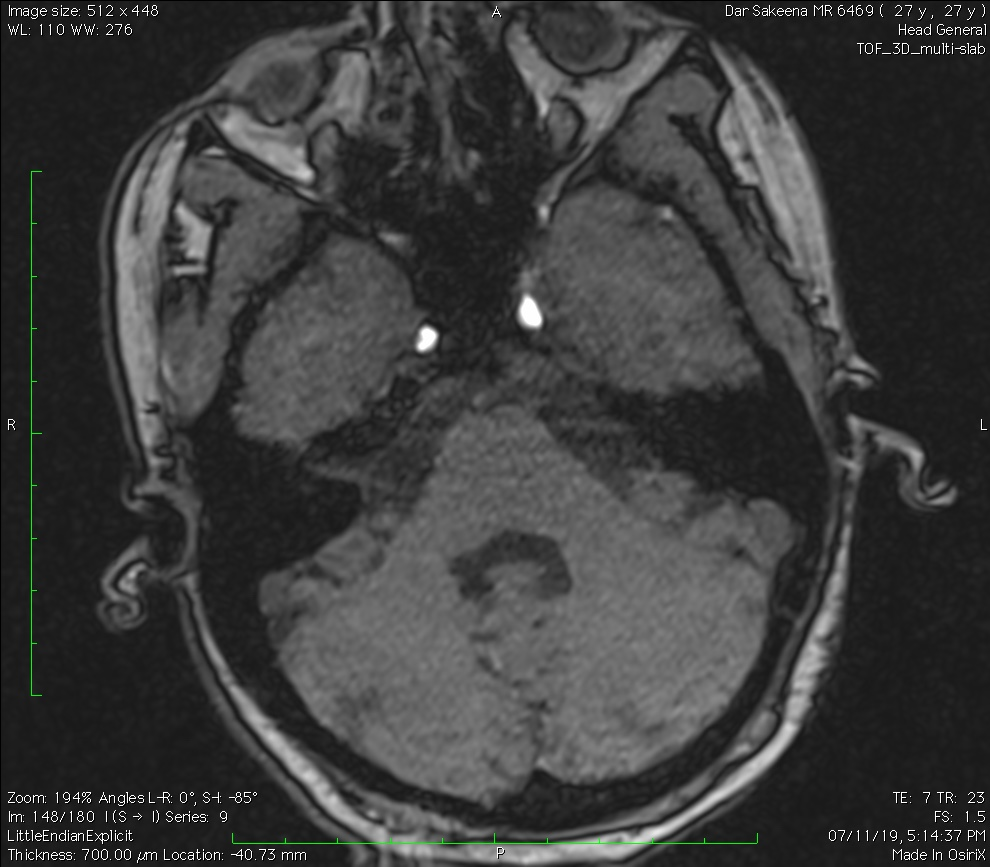
HYPERDENSE BASILAR ARTERY – EARLY SIGN OF STROKE
Keywords:
basilar artery, hyperdense, posterior circulation stroke
Abstract
Hyperdense artery sign is presumed to represent acute thrombus or clot, and is an early indicator of posterior circulation stroke. This sign if detected, in proper clinical scenario can help the clinician to detect the basilar occlusion and to intervene early. We are presenting a case of 30 yr. old female, normotensive, nondiabetic presented with sudden onset focal left sided seizure, central vertigo, diplopia and decreased vision in left eye to emergency department. On examination, ptosis and anisocoria, Left facial nerve palsy. Patient was advised NCCT Head, which showed hyperdense basilar artery , seen retrospectively after MRI.
Downloads
Download data is not yet available.
References
1. Reinemeyer NE, Tadi P, Lui F. Basilar Artery Thrombosis.Treasure Island (FL): StatPearls Publishing; 2019 Jan,https://www.ncbi.nlm.nih.gov/books/NBK532241/
2. Kubik CS, Adams RD. Occlusion of the basilar artery; a clinical and pathological study. Brain. 1946;69(2):73-121.
3. Lindsberg PJ, Mattle HP. Therapy of basilar artery occlusion: a systematic analysis comparing intra-arterial and intravenous thrombolysis. Stroke. 2006;37(3):922-928.
4. Schonewille WJ, Algra A, Serena J, Molina CA, Kappelle LJ. Outcome in patients with basilar artery occlusion treated conventionally. J Neurol Neurosurg Psychiatry. 2005;76(9):1238–1241.
5. Labauge R, Pages M, Marty-Double C, Blard JM, Boukobza M, Salvaing P. Occlusion of the basilar artery. A review with 17 personal cases (author’s transl) [in French]. Rev Neurol (Paris).1981;137(10):545–571.
6. Voetsch B, DeWitt LD, Pessin MS, Caplan LR. Basilar artery occlusive disease in the New England Medical Center Posterior Circulation Registry. Arch Neurol. 2004;61(4):496-504.
7. Ferbert A, Bruckmann H, Drummen R. Clinical features of proven basilar artery occlusion. Stroke. 1990;21(8):1135–1142.
8. Sarraj A,Medrek S,Albright K,et al.Posterior circulation stroke is associated with prolonged door to-needle time [published online March 22, 2013]. Int J Stroke. 2013.
9. Ertl-Wagner B, Eftimov L, Blume J, Bruening R, Becker C, Cormack J, et al. Cranial CT with 64-,16-, 4- and single-slice CT systems-comparison of image quality and posterior fossa artifacts in routine brain imaging with standard protocols. Eur Radiol. 2008;18(8):1720-6.
10. Connell L, Koerte IK, Laubender RP, Morhard D, Linn J, Becker HC, et al. Hyperdense basilar artery sign—a reliable sign of basilar artery occlusion. Neuroradiology. 2012;54(4):321-7
11. Tan X,Guo Y. Hyperdense basilar artery sign diagnoses acute posterior circulation stroke and predicts short-term outcome. Neuroradiology. 2010 Dec;52(12):1071-8.
2. Kubik CS, Adams RD. Occlusion of the basilar artery; a clinical and pathological study. Brain. 1946;69(2):73-121.
3. Lindsberg PJ, Mattle HP. Therapy of basilar artery occlusion: a systematic analysis comparing intra-arterial and intravenous thrombolysis. Stroke. 2006;37(3):922-928.
4. Schonewille WJ, Algra A, Serena J, Molina CA, Kappelle LJ. Outcome in patients with basilar artery occlusion treated conventionally. J Neurol Neurosurg Psychiatry. 2005;76(9):1238–1241.
5. Labauge R, Pages M, Marty-Double C, Blard JM, Boukobza M, Salvaing P. Occlusion of the basilar artery. A review with 17 personal cases (author’s transl) [in French]. Rev Neurol (Paris).1981;137(10):545–571.
6. Voetsch B, DeWitt LD, Pessin MS, Caplan LR. Basilar artery occlusive disease in the New England Medical Center Posterior Circulation Registry. Arch Neurol. 2004;61(4):496-504.
7. Ferbert A, Bruckmann H, Drummen R. Clinical features of proven basilar artery occlusion. Stroke. 1990;21(8):1135–1142.
8. Sarraj A,Medrek S,Albright K,et al.Posterior circulation stroke is associated with prolonged door to-needle time [published online March 22, 2013]. Int J Stroke. 2013.
9. Ertl-Wagner B, Eftimov L, Blume J, Bruening R, Becker C, Cormack J, et al. Cranial CT with 64-,16-, 4- and single-slice CT systems-comparison of image quality and posterior fossa artifacts in routine brain imaging with standard protocols. Eur Radiol. 2008;18(8):1720-6.
10. Connell L, Koerte IK, Laubender RP, Morhard D, Linn J, Becker HC, et al. Hyperdense basilar artery sign—a reliable sign of basilar artery occlusion. Neuroradiology. 2012;54(4):321-7
11. Tan X,Guo Y. Hyperdense basilar artery sign diagnoses acute posterior circulation stroke and predicts short-term outcome. Neuroradiology. 2010 Dec;52(12):1071-8.
Published
2020-03-13
How to Cite
1.
Masood M, Kumar A, Shah O, Shaheen F. HYPERDENSE BASILAR ARTERY – EARLY SIGN OF STROKE. jms [Internet]. 2020Mar.13 [cited 2026Oct.3];23(1):46-7. Available from: http://ano.jmsskims.org/index.php/jms/article/view/498
Section
Clinical Images